Project / Built Work

2x72 Belt Grinder

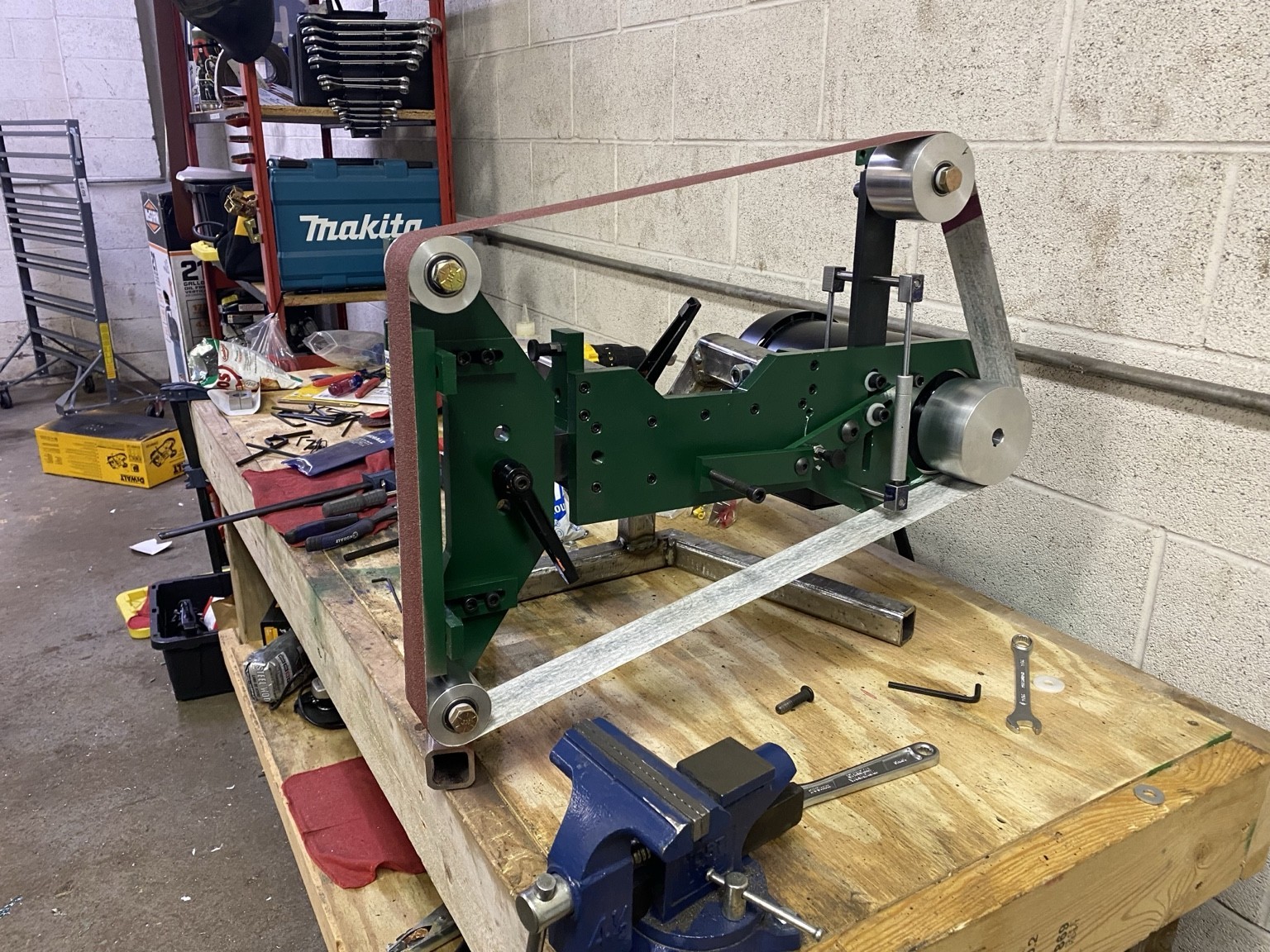
A 3 hp variable-speed belt grinder built for knife making and general shop work—and the project that pushed me to buy my first milling machine.

I built the grinder in 2020 from purchased metric plans that I reworked around practical inch-standard material sizes. Nearly every custom component was manually machined or fabricated, and the project became one of the main ways I learned to use my first Bridgeport.

01 / Purpose

Why I built it

Commercial 2x72 grinders were expensive, and I wanted enough power for knife making without the machine being easy to stall under heavy grinding pressure. I also simply wanted to build one.

The finished machine uses a 3 hp three-phase IronHorse motor and a variable-frequency drive powered from the shop's 220 V single-phase supply. That combination provides both the motor power I wanted and adjustable belt speed for aggressive stock removal, post-heat-treat work, and finer finishing.
Primary use
Knife making / general grinding
Motor
3 hp / three-phase
Power
220 V single-phase through VFD
Drive wheel
Approximately 6 in aluminum
Platen
10 in cold-rolled steel
Machining
Manual Bridgeport / no DRO
Approximate cost
$750

02 / Adaptation

Metric plans to inch-standard stock

The grinder was not originally my design. I purchased an inexpensive set of metric plans from a YouTube creator and adapted them to the material and hardware I could readily obtain.

It was originally designed to use on-size cold rolled steel in metric sizes, so I selected similar U.S. stock sizes and changed the surrounding geometry so the assemblies would continue to work together. The original 20 mm main plates and 40 mm square stock became approximately 5/8-inch plate and 1.5-inch square stock, requiring changes to plate widths, clearances, hole spacing, and mating parts throughout the machine.

Designed on paper

There was no CAD model. I worked from printed drawings, crossed out metric dimensions, and wrote in the revised inch-standard values as I determined how each component needed to fit the next.

03 / Turning point

The project that got me into machining

My original plan was to make the grinder with a hacksaw, angle grinder, drill, and files. After cutting and filing the first components by hand for several hours, it became clear that the precision and amount of material removal involved made a milling machine the right tool.

I researched used mills, learned what features I needed and what represented a reasonable value, and eventually bought an old Bridgeport vertical mill. I had very little machining experience at the time and learned largely through online research, experimentation, and intuition.

The Bridgeport had no digital readout, so most of the grinder was produced with traditional manual methods: layout dye, scribed lines, hand measurement, machine graduations, and physical fitting. The grinder became both a working machine and one of the projects through which I learned machining.

04 / Mechanical design

Power, tracking, and two orientations

The grinder runs standard 2x72-inch abrasive belts around purchased aluminum wheels. Its main structure combines cold- and hot-rolled steel, with primary side plates approximately 5/8 inch thick.

Tension and tracking

A gas-strut-loaded moving arm applies belt tension. Pulling the arm down releases the belt for changes, and a removable pin provides a quick way to secure or release the mechanism.

An adjustment screw changes the angle of the upper curved wheel slightly, moving the running belt laterally until it is centered.

Platen and pivot

The primary flat-grinding attachment uses a removable 10-inch cold-rolled steel platen. The complete grinder body and motor pivot approximately 90 degrees inside the welded support stand, allowing either vertical or horizontal use.

Variable-speed drive

The VFD converts the shop's 220 V single-phase power for the three-phase motor and provides speed control. I intentionally chose a motor large enough to resist bogging during aggressive stock removal while retaining slower speeds for finer-grit work.